Building the Future of AI: Xorbix Mentors Students & Sponsors Badger BuildFest 2026

On September 26–27, I had the opportunity to represent Xorbix Technologies, alongside fellow Xorbix Data Engineer Tyler Faulkner, as a mentor and challenge judge at Badger BuildFest 2026, hosted by the University of Wisconsin – Madison’s Tech Exploration Lab. The event brought together students from across academic disciplines to collaborate, build prototypes, and tackle challenges […]
Working with Claude Instructions

You open Claude.ai to work on a client proposal, an operations problem, or maybe a technology decision. Before you get to the actual question, you type the usual briefing. Tomorrow, you’ll do another task and give Claude the same orientation speech again. Account-wide instructions and project instructions give those reminders a permanent home.
Understanding Databricks Query Performance: A Practical Guide to Query Profile Analysis
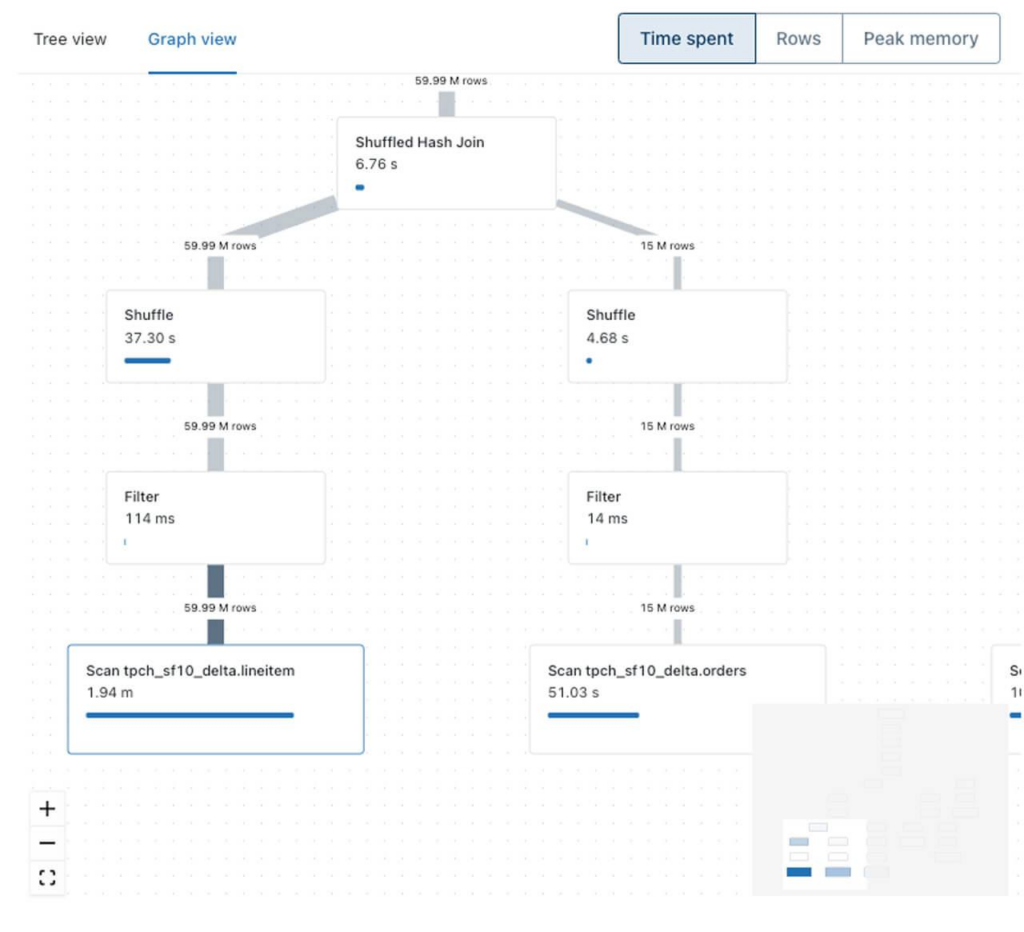
When a SQL query takes longer than expected, execution time is usually the first thing we notice. But knowing that a query took 30 seconds or three minutes does not tell us why it was slow. The query may have scanned too much data, moved data between partitions, created a large intermediate result during a […]
Introducing Visual Databricks App Builder (VDAB) – WI Databricks User Group
A Practical Guide to Intelligent Document Processing (IDP)

Every business has important information trapped in documents. It may arrive as an email attachment, invoice, claim form, contract, application, or scanned report. In many organizations, an employee still opens each item, finds the needed details, and types them into another system. Intelligent document processing, or IDP, is designed for that variability.
Designing Scalable Intelligent Document Processing Platforms – WI Databricks User Group
Databricks Data + AI Summit 2026 Recap – WI Databricks User Group
Auto Loader vs COPY INTO in Databricks: A Decision Guide for Data Engineers
In modern lakehouse pipelines, one of the first ingestion decisions data engineers face is whether to use Auto Loader or COPY INTO. Both can load files incrementally into Delta tables, but they solve very different operational problems. Choosing the wrong one can impact scalability, cost, reliability, and maintenance overhead.
A Field Study: Databricks Genie vs Microsoft Fabric

Recently I have been leading an assessment for a global industrial manufacturer comparing Databricks Genie against an already mature Microsoft Power BI/Fabric environment. Genie feels like an up-and-coming platform gaining significant momentum alongside more established incumbents.
Lakehouse Accelerator – Wisconsin Databricks User Group