Building the Future of AI: Xorbix Mentors Students & Sponsors Badger BuildFest 2026
Author: Patrick Marshall, Software Engineer
9 October, 2026
UW-Madison Tech Exploration Lab | September 26–27, 2026
What happens when you bring together talented university students, emerging technologies, and real-world challenges with just 24 hours to build a solution? You get an impressive display of creativity, collaboration, and innovation.
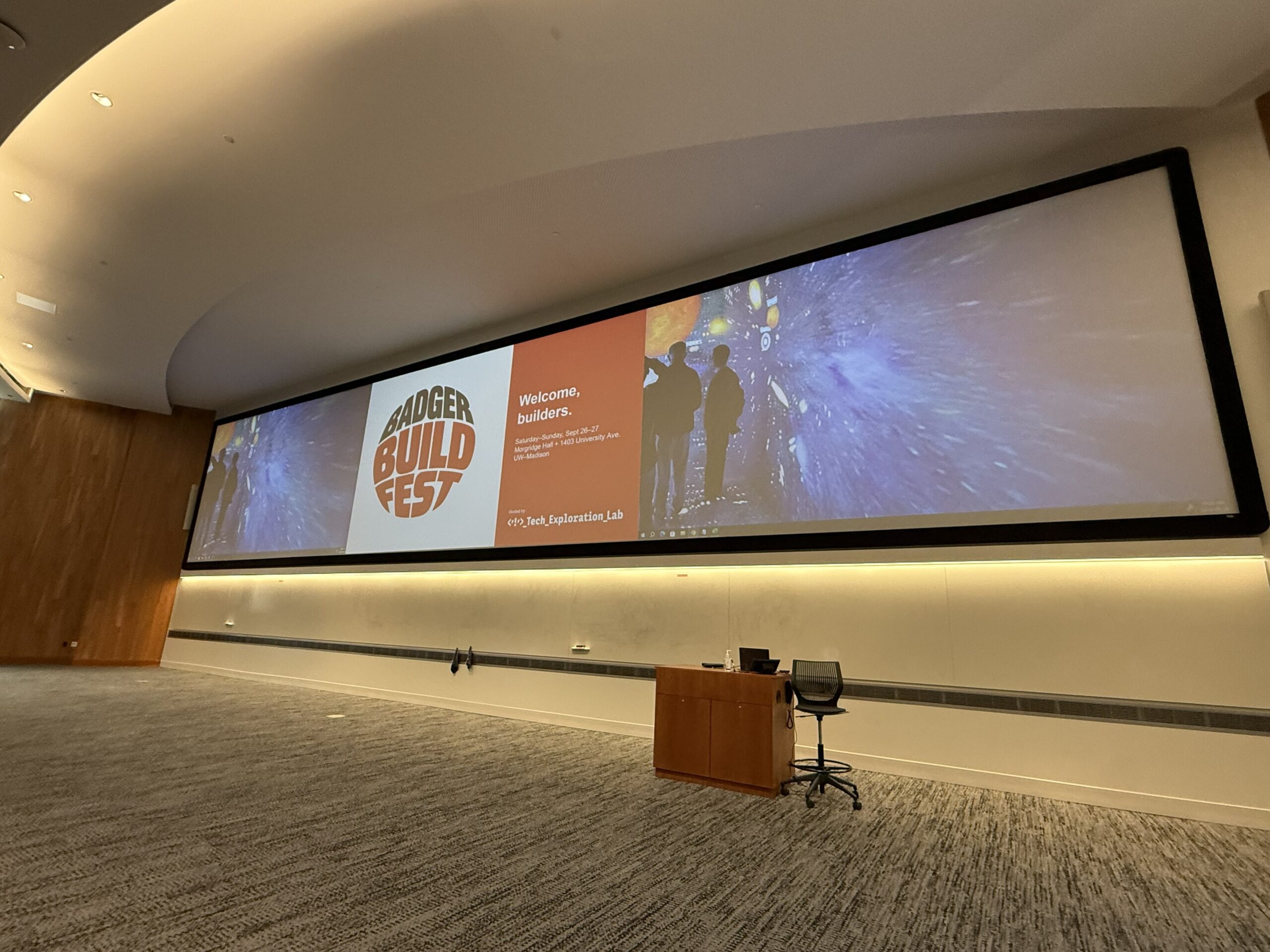
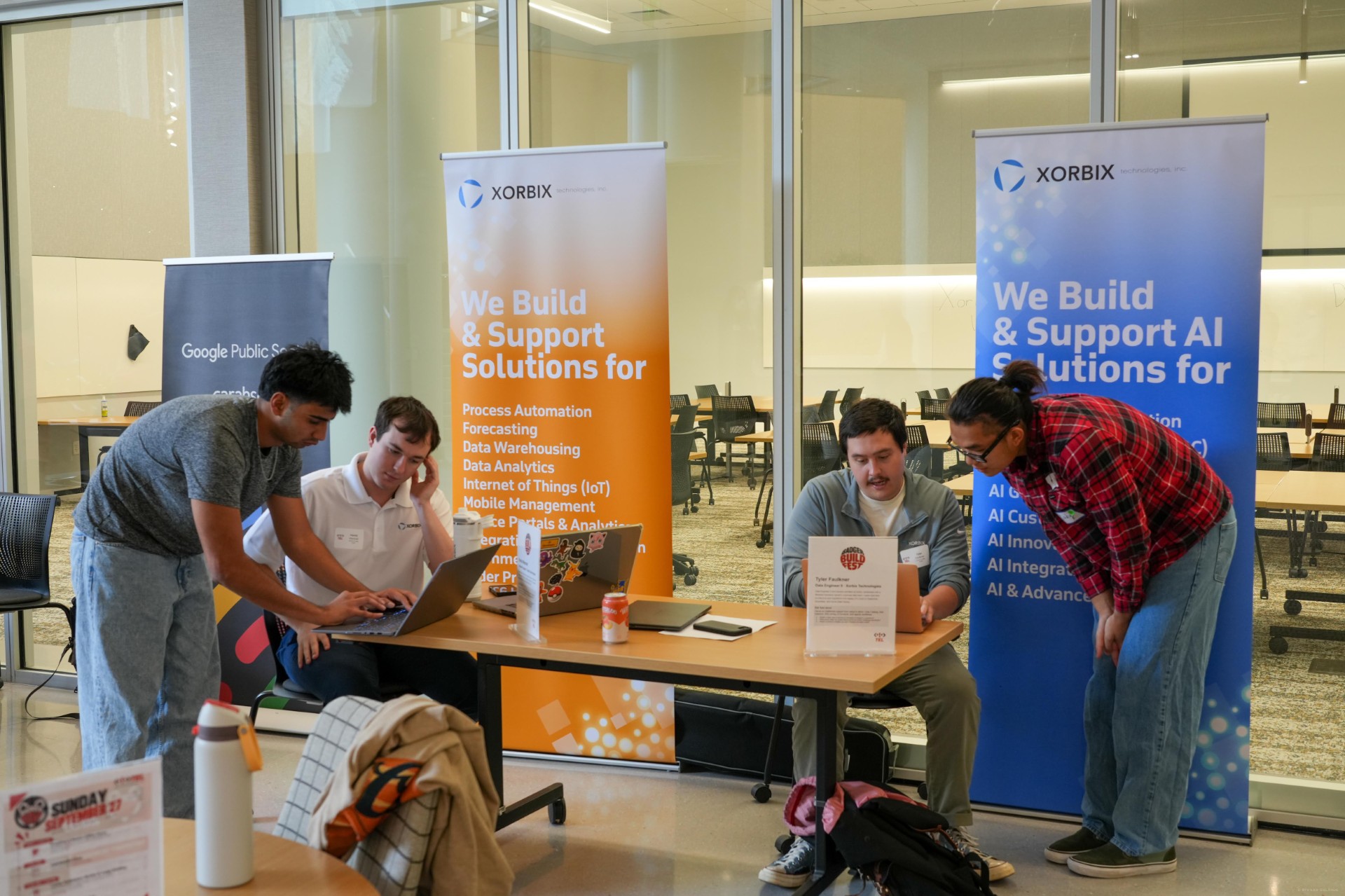
On September 26–27, I had the opportunity to represent Xorbix Technologies, alongside fellow Xorbix Data Engineer Tyler Faulkner, as a mentor and challenge judge at Badger BuildFest 2026, hosted by the University of Wisconsin – Madison’s Tech Exploration Lab.
The event brought together students from across academic disciplines to collaborate, build prototypes, and tackle challenges spanning artificial intelligence, automation, healthcare, accessibility, and entrepreneurship. Students were challenged to turn ambitious ideas into working solutions within a 24-hour development window.
For Xorbix, the weekend was an opportunity to connect with the next generation of technology professionals while sharing our experience building practical AI and data-driven solutions.
Bringing Real-World AI Challenges to the Classroom
As a company specializing in software development, data engineering, and AI, Xorbix wanted to give students a challenge that reflected the actual problems organizations encounter when implementing AI.
Our sponsored challenge, “Databricks Real-World Workflows,” invited teams to use the Databricks platform to build an intelligent tool or agent that simplifies or automates a real-world workflow.
We provided two suggested directions to help guide participants:
- Organizational Knowledge Capture: systems that capture, organize, and retrieve institutional knowledge.
- Document Processing Automation: using AI to interpret, extract, and process information from documents.
Students were also encouraged to identify their own problems and propose creative solutions.
A key part of our challenge was emphasizing that building an AI application involves more than simply connecting to a language model. We encouraged teams to consider how their solutions would handle imperfect data, respond to unexpected inputs, provide transparency into AI-generated decisions, and incorporate human feedback to improve reliability. These considerations are essential when moving AI solutions beyond demonstrations and into practical applications.
Mentoring the Next Generation of Developers
One of the most rewarding aspects of the weekend was working directly with UW–Madison students as they developed their projects. Throughout the hackathon, Tyler and I served as technical mentors, helping participants navigate challenges involving Databricks, data engineering, AI integration, and application development.
From troubleshooting technical issues to discussing system architecture and refining project scope, we enjoyed guiding students through their development challenges under tight deadlines—a very typical day in the life of a working software developer!
What stood out most was the students’ eagerness to experiment and grow their skills. Some teams arrived with experience building AI applications, while others were exploring unfamiliar tools and technologies for the first time. Regardless of their backgrounds, students showed a willingness to tackle complex problems, adapt their approaches, and collaborate to find the best solutions.
It was especially exciting to watch teams go from an initial concept to a functional application in such a short time. Students came to us at the start of the hackathon with early ideas, and seeing those ideas transform into polished final presentations was amazing!
The experience also gave us the chance to connect with the broader UW–Madison technology community, including fellow mentors, industry professionals, and students pursuing careers in software engineering, data science, and artificial intelligence.
Exploring Innovation Through the Databricks Challenge
Our Databricks Real-World Workflows challenge attracted nine teams made up of 33 students, each bringing unique ideas and approaches to solving real-world problems.
The variety of submissions showed just how broadly AI and data technologies can be applied. Some teams explored how AI could improve the way organizations capture and retrieve information, while others built tools to assist with personal health monitoring, automate content organization, or improve the reliability of AI-driven decisions. We also saw creative approaches to integrating AI into existing development workflows and using data analytics to monitor application performance.
What impressed us most was not only the diversity of problems being addressed, but also the depth of the solutions students built in such a short time. Many teams went beyond a functional prototype, incorporating thoughtful system architectures, data pipelines, and mechanisms for evaluating and improving their AI applications.
Following the hackathon, Tyler and I reviewed the submissions to select the winners of Xorbix’s sponsored challenge. Our evaluation focused on effective use of the Databricks platform, practical problem-solving, thorough testing, and meaningful human oversight. In particular, we wanted to see teams show how their systems could incorporate human feedback to improve reliability, rather than treating AI-generated outputs as automatically correct.
After reviewing the projects, two submissions stood out:
Selecting winners was challenging, given the quality and variety of the submissions, but Assay AI and Jellyfish distinguished themselves through in-depth use of Databricks, comprehensive testing, and thoughtful incorporation of human feedback.
Congratulations to both winning teams, and to all nine teams who took part in our challenge! We were incredibly impressed by the creativity, technical depth, and effort across every submission.
More Than Just a Hackathon
Beyond the technical accomplishments, Badger BuildFest reinforced the value of bringing students and industry professionals together.
Hackathons give students an environment to experiment with emerging technologies, apply classroom knowledge to practical problems, and gain experience making engineering decisions under real-world constraints. Watching students collaborate, overcome technical hurdles, and turn their ideas into working applications was a great reminder of how much can be accomplished when creativity and technical curiosity come together.
For those of us working in the industry, these events offer an equally valuable opportunity to engage with fresh perspectives and creative approaches to familiar challenges.
At Xorbix, we believe successful AI solutions require a combination of technical innovation, thoughtful engineering, and a clear understanding of the problem being solved. Events like Badger BuildFest give aspiring developers the chance to explore all three while gaining hands-on experience with technologies used across the industry.
Looking Ahead
A special thank-you to Sandra Bradley, Executive Director of the UW-Madison Tech Exploration Lab, and her team for hosting such an incredible event. It was a pleasure working alongside fellow sponsors and the many organizers who made Badger BuildFest 2026 an outstanding success.
Most importantly, congratulations to all the students who participated. The creativity, dedication, and technical accomplishments on display throughout the weekend were truly impressive.
Tyler and I thoroughly enjoyed representing Xorbix, sharing our experience, and connecting with the UW-Madison technology community. It was a fantastic opportunity to support aspiring developers and see firsthand the innovative ideas the next generation of engineers is bringing to the table.
We look forward to seeing how these students continue developing their ideas and applying their skills to future technology challenges—and we hope to support similar opportunities in the future!